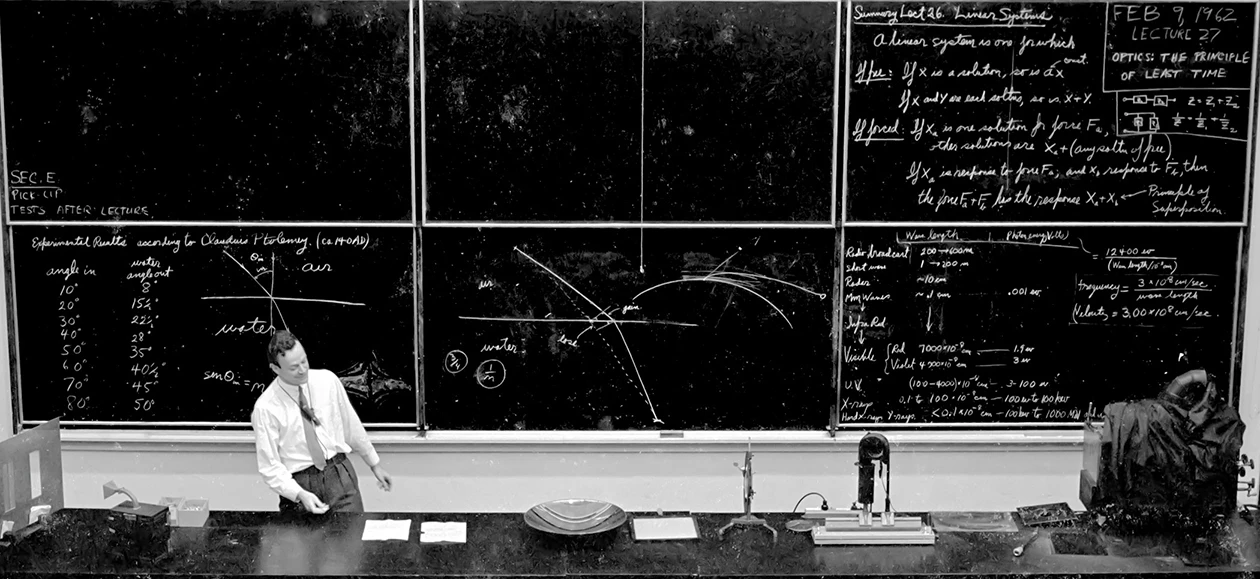
Ever see this guy on the internet?
This is Richard Feynman, a Nobel Prize-winning American physicist at Princeton University. Since his passing in 1988, his lectures on science fundamentals have garnered a cult-like following of dedicated physics nerds online.
Feynman specialized in the path integral formulation of quantum mechanics — a field so advanced that the Goodnotes marketing team probably has no clue what it means! It's fitting, perhaps, that Feynman was declared ‘The Smartest Man in the World’ by Omni Magazine in 1979.
But how did The Smartest Man In The World learn or study? The answer: the Feynman Technique.
What is the Feynman Technique?
The Feynman Technique is a four-step process for understanding any topic, with an emphasis on comprehension over memorization. Feynman himself believed that learning should be active, and that understanding of a concept is best demonstrated by an ability to explain it simply.
Today, the technique is known to be one of the most effective study techniques, and incorporates these key steps:
- Choose a concept to study
- Explain it to someone unfamiliar with the topic
- Assess and improve your understanding
- Review and repeat
How to use the Feynman Technique
Step 1: Choose a concept to study
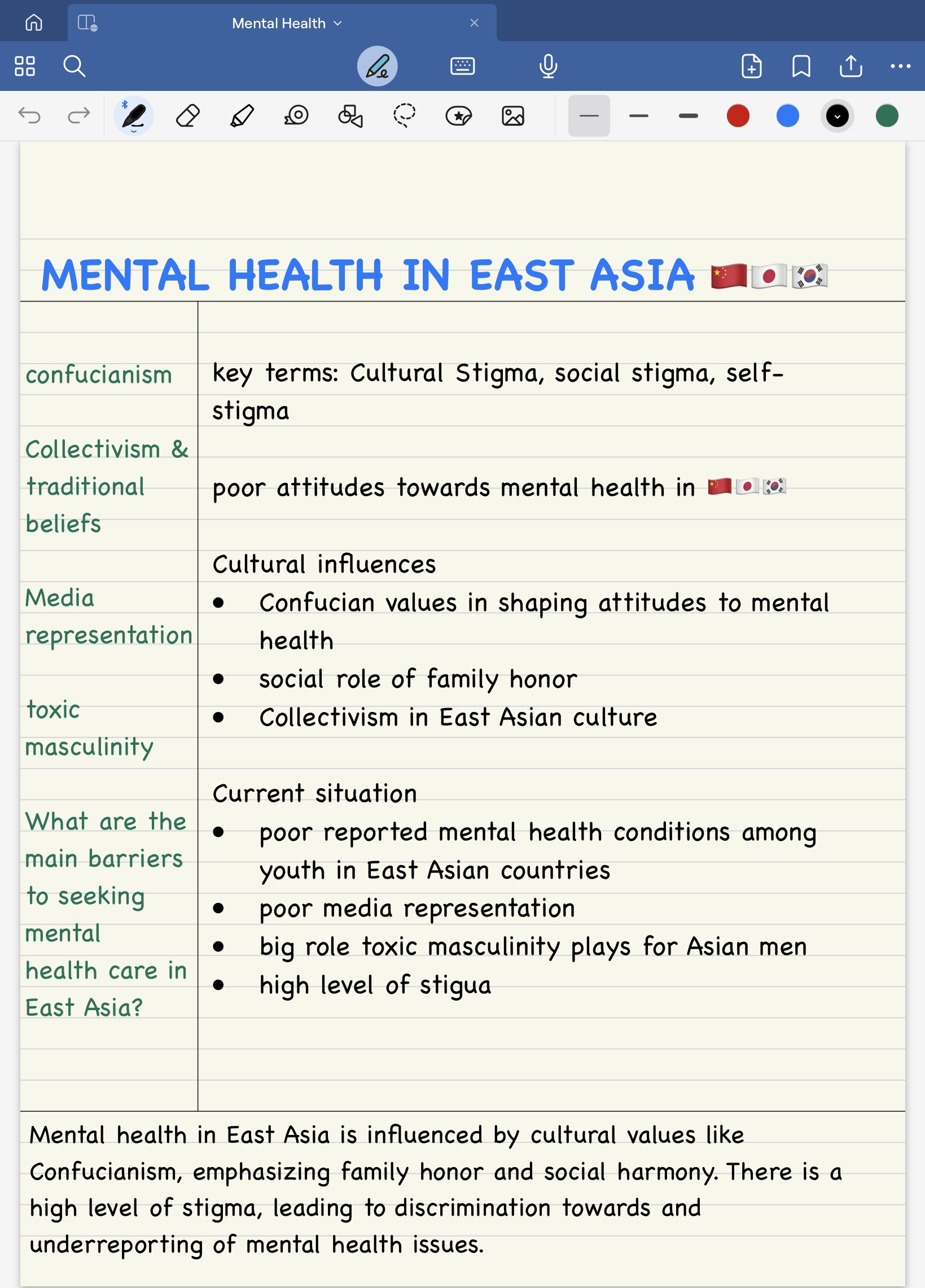
First, pinpoint the specific subject you want to learn more about. Then, read up on it. Do research online and take notes. Develop your initial understanding of the concept.
As you do this, you might want to use the Cornell method or another other science-based note-taking technique.
Step 2: Explain it to someone unfamiliar with the topic
Next, find a friend or family member. Speak to them aloud, and explain the concept, theory, or idea you’ve studied as if they were a child. Simplify your language and use analogies. Focus on covering the essential details as you explain what you’ve learned to them.
Step 3: Assess and improve your understanding
Now that you’ve had a go at explaining the concept, review your explanation. Where were the gaps in your understanding? Which parts were most difficult to explain and why? What details did you miss?
This process will help you highlight key points in your notes that you need to revisit or research further, allowing you to enhance your understanding.
Step 4: Review and repeat
Now that you’ve taken a step back and solidified your knowledge, refine and simplify your explanation further. Whether to the same person or someone new, explain your concept again. Your explanation should have improved from earlier, and highlight your own improvements in understanding the subject.
Why is the Feynman Technique so effective?
Feynman once said “I was an ordinary person who studied hard.” Take him up on his word, and with the Feynman technique, anyone can become “Smartest Person In The World” too.
But how is the Feynman Technique so effective?
- Explaining for understanding. If you can’t explain a concept in basic terms, maybe you don’t understand it as well as you think you do. Simple explanations ensure you understand the concept at the most fundamental level.
- Engaging active recall. Rather than passive reading or listening, explanation requires that you retrieve the information from memory and reconstruct it in your own words. This enhances learning and retention.
- Highlighting knowledge gaps. When you struggle to explain certain parts of the subject, the technique points towards areas that might need further review.
- Improves communication skills. By explaining concepts, you also develop the ability to communicate complex information clearly to others.
Reach all your academic goals with these tips on how to study
Committed to your journey towards better grades? Read about more study techniques here!